
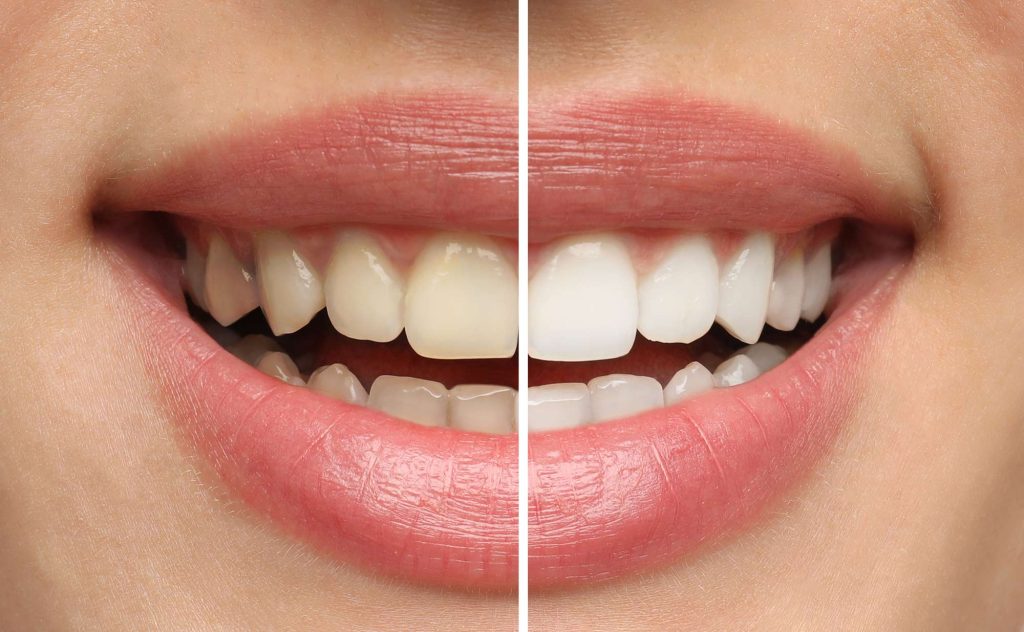
Coffee, tea, and soda can stain your smile, and cloud your confidence. As a leading cosmetic dentist in Spokane, Washington, Dr. Lopez understands the importance of a bright and confident smile. Summit Dentistry in Spokane provides solutions utilizing teeth whitening and teeth bleaching. We will help you decide which option is right for you by providing the key distinctions between teeth whitening and teeth bleaching, debunk common misconceptions, discuss the factors to consider before deciding, and help you choose between these two options.
Understanding Teeth Whitening vs. Teeth Bleaching
Let’s clarify the difference between teeth whitening and teeth bleaching. While these terms are often used interchangeably, they refer to different processes.
Teeth whitening refers to the removal of external stains and discoloration on the surface of your teeth. It involves using whitening toothpaste, mouthwashes, and over-the-counter whitening kits. Whitening toothpastes often contain mild abrasives and polishing agents that help remove surface stains.
On the other hand, teeth bleaching involves the use of professional-grade bleaching agents like hydrogen peroxide or carbamide peroxide to lighten the color of your teeth beyond their natural shade. This process is done by a dental professional at Summit Dentistry and produces more dramatic results.
Exploring the Key Distinctions
When it comes to teeth whitening products, you’ll find numerous options available in the market. Whitening toothpastes are a popular choice for daily use. They work by removing surface stains through gentle abrasion and chemical agents. Almost all leading brands have whitening toothpaste options.
Whitening mouthwashes are another convenient option. They usually contain hydrogen peroxide or carbamide peroxide, which helps whiten your teeth while freshening your breath.
If you’re looking for more noticeable results, over-the-counter whitening kits may be the way to go. These kits usually contain whitening gel, which is applied to custom-made trays that mold to your teeth. The gel breaks down stains, revealing a brighter smile. Whitening strips are another over the counter option, though they may not produce consistent results across the surface of each tooth.
For those seeking professional-grade results, teeth bleaching under the supervision of a dental professional at Summit Dental is recommended. This process involves the use of stronger bleaching agents and can be performed in-office or at home with customized trays.
Common Misconceptions Debunked
There are several misconceptions surrounding teeth whitening and bleaching that we would like to address.
Misconception #1: Teeth whitening, and teeth bleaching are the same thing. As we mentioned earlier, they involve different processes and produce varying results.
Misconception #2: Teeth whitening products cause tooth sensitivity. While some people may experience temporary sensitivity after whitening, it is usually mild and resolves on its own.
Misconception #3: Overuse of whitening products can harm your teeth. Using whitening products as directed is safe. However, excessive use can lead to enamel erosion and tooth sensitivity.
Misconception #4: Teeth whitening or bleaching is permanent. The effects of teeth whitening and bleaching are not permanent, as teeth are constantly exposed to staining agents like coffee, tea, and tobacco. Touch-up treatments may be required to maintain your desired shade.
If you still have questions about the safety of teeth whitening and bleaching, give Summit Dentistry a call. We are happy to answer all questions.
Factors to Consider Before Deciding
One important factor to consider is the current shade of your teeth. If you have mild surface stains and discoloration, teeth whitening may be sufficient to achieve your desired results. However, if you have deeper stains or want a more significant change in the color of your teeth, teeth bleaching may be the better option.
Another factor to consider is your budget. Teeth whitening products are more affordable and accessible, making them a popular choice for those on a tight budget. On the other hand, teeth bleaching performed by Dr. Lopez may be more expensive but can provide more dramatic and long-lasting results.
It’s also important to consider your oral health. If you have any underlying dental issues, such as cavities or gum disease, it’s advised to address these before undergoing any teeth whitening or bleaching procedures. We can evaluate your oral health and recommend the most suitable treatment option for you.
Lastly, it’s essential to manage your expectations. While teeth whitening and bleaching can significantly improve the appearance of your teeth, they cannot completely change the natural color or structure of your teeth. It’s important to have realistic expectations and understand that the results may vary depending on individual factors.
By considering these factors and understanding the distinctions between teeth whitening and teeth bleaching, you can make an informed decision about which option is best for you.
Choosing Between Teeth Whitening and Bleaching
Ultimately, choosing between teeth whitening and teeth bleaching depends on your individual preferences and goals.
If you’re seeking a subtle improvement in the color of your teeth or want to tackle mild surface stains, teeth whitening products like whitening toothpastes or mouthwashes may be suitable for you.
However, if you desire a more noticeable transformation and wish to lighten the shade of your teeth beyond their natural color, professional teeth bleaching may be the best option. Giving us a call and speaking to our dental team will help you determine the most effective and safe approach to achieve your desired results.
If you’re in the Spokane Valley, Summit Dentistry is here to support you in your journey to a brighter smile. If you have any further questions or concerns about teeth whitening or teeth bleaching, don’t hesitate to reach out to our expert team for guidance.